facebookbuy Indoor Slippers Spreadsheet Guide
facebookbuy Indoor Slippers Spreadsheet Guide
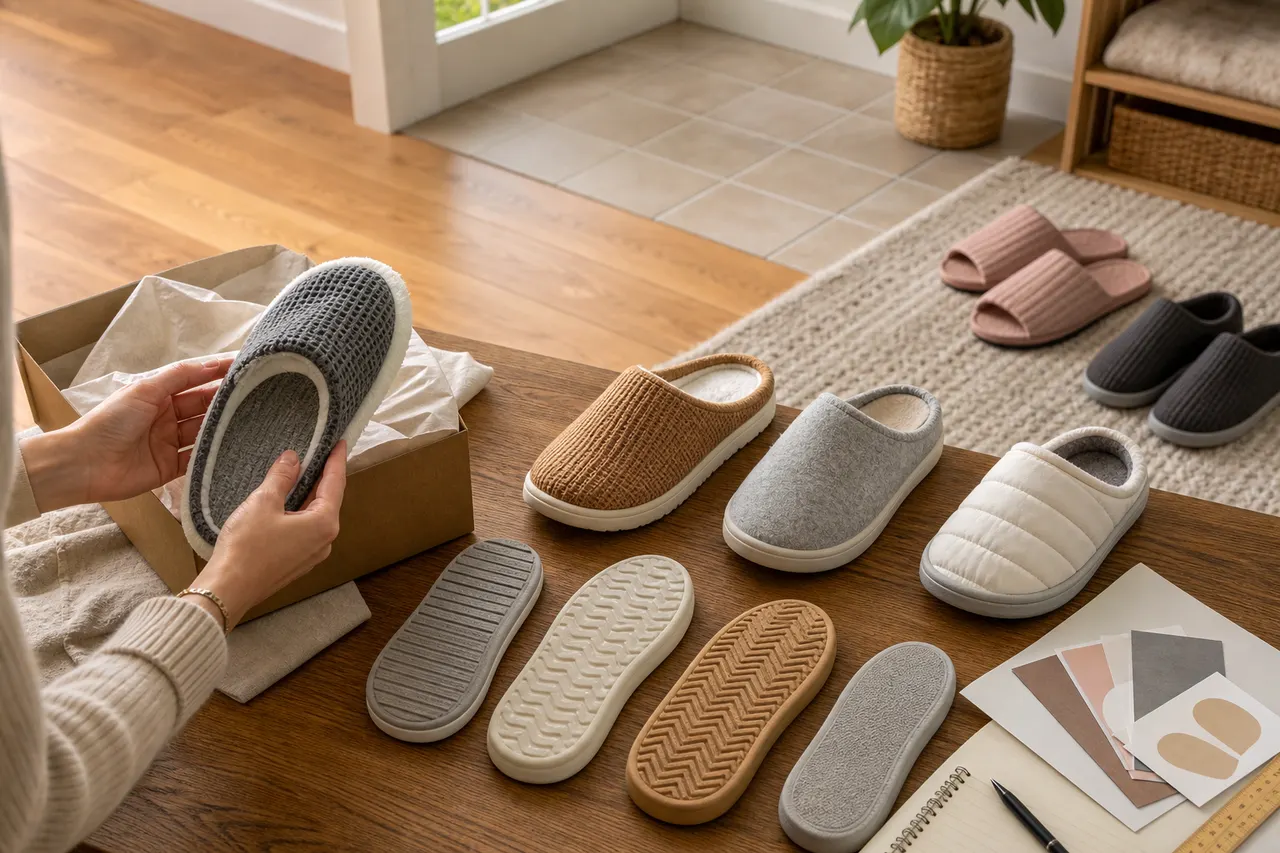
Indoor slippers should not be chosen solely by color or appearance. What truly affects daily use is floor friction, sole flexibility, toe coverage, foot shape, and whether socks are worn. This article provides a directly actionable filtering method to help you narrow down candidates from the facebookbuy Spreadsheet, and then use product information and warehouse QC photos to eliminate obviously unsuitable styles.
As of September 3, 2026, facebookbuy.org has visible product search, category browsing, image search, product details, a QC Photos section, and multiple agent platform entry points. facebookbuy is a product discovery and organization platform, not an official Facebook shopping service, and does not equal the actual seller or fulfillment provider. Prices, inventory, sizes, promotions, return/exchange conditions, and available shipping routes may change and should be re-verified on the ordering agent platform.
This article is suitable for buyers who need to choose daily indoor slippers and are willing to check size and QC information. If you need professional non-slip work shoes, orthopedic footwear, bathroom-specific safety shoes, or medical-grade protection due to diabetes, wounds, or mobility issues, this guide cannot replace professional advice.
First clarify the room flooring and main usage scenarios
Write down the two spaces where slippers will be most frequently used, rather than vaguely filling in "indoor". Bedroom wooden floors, kitchen tiles, bathroom wet areas, and carpeted living rooms have different requirements for soles. 🏠
Wooden or laminate flooring: prioritize checking whether the sole is flat and has fine, dense tread, and be mindful of noise that hard soles may produce on the floor.
Dry tiles: need sufficient ground contact area and clear tread, but the word "non-slip" in product images cannot replace actual testing.
Bathroom or damp areas: ordinary plush slippers are not a suitable default choice. Confirm whether the upper and insole absorb water, whether the sole drains, and whether wet shoes are prone to odor.
Carpet: overly deep or hard tread may affect gait; overly soft and loose shoe shape may easily slip off when turning.
Short trips to pick up deliveries: open-back styles are usually quicker to put on and take off, but stability is weaker when going up and down stairs or walking quickly.
If a pair of slippers needs to cover both slippery kitchen floors and quiet walking in the bedroom, prioritize the higher-risk floor. Products whose wet-floor suitability cannot be confirmed from the page should only be marked as "to be verified", not directly labeled as non-slip.
What screening clues can the facebookbuy Spreadsheet provide
facebookbuy is better suited for the task of "discovering candidates". You can start from search or shoe categories, and view product names, images, listed prices, detail page info, the QC Photos section, and available agent entry points. 🔎 Page display does not mean that inventory, prices, or sizes are still valid, nor does it constitute a guarantee of seller, material, or quality.
It is recommended to record each candidate in the same spreadsheet, and clearly mark unconfirmable fields as "unknown". Do not fill in materials, sizes, or performance based on similar images.
Candidate field | What to record | Conditions for elimination or pending verification |
|---|---|---|
Page identification info | Product name, screenshot date, candidate number | Page inaccessible or name unclear |
Shoe type | Closed-toe, open-toe, open-heel, or closed-heel | Front and rear structure unclear from images |
Size basis | Size chart, inner length, width hints | Only generic shoe size, no measurement method |
Sole | Tread, thickness profile, flex position | Only says "non-slip", no verifiable details |
QC status | Available photo angles and items needing additional shots | Only promotional images or photos not matching purchased spec |
Dynamic facts | Product price, domestic shipping, stock, return/exchange conditions | Not re-confirmed on ordering platform |
When screening, you can keep three to five candidates rather than ordering the first item that matches your aesthetic preference. Having too many candidates is also unnecessary, as you still need to verify size, sole, and QC evidence one by one.
Choose shoe type based on toe coverage, open toe, and heel structure
Closed-toe styles cover the toes, suitable for cooler environments or those who want to reduce toe bumps, but the interior length and width of the toe box are more critical. Too narrow may squeeze the toes, too long will cause the foot to slide forward and backward inside the shoe.
Open-toe styles dissipate heat more easily and make it easier to observe the forefoot position. It does not necessarily mean cool; thick plush uppers and non-breathable insoles can still accumulate heat. If the front opening is too large, toes may slide out forward; if too small, it may compress the instep.
Open-heel styles are quickest to put on and take off, suitable for static or short-distance indoor activities. Closed-heel or styles with heel fixation are more suitable for frequent walking, going up and down stairs, or carrying items while walking. 👟
When choosing, you can make a simple judgment:
If you often stand while cooking, prioritize stable foot coverage and resistance to rolling over.
If you often get up in the middle of the night, prioritize styles that are easy to put on accurately and won't drag on the floor.
If you have a high instep, check the opening height, not just the sole length.
If your toes are sensitive to cold, look at the interior space of the toe box and lining condition.
If you tend to kick off slippers while walking, reduce choices of overly wide open-heel styles.
Check applicability based on sole tread and flex position
Sole photos should at least show the tread, forefoot flex area, and heel profile. Deep tread does not necessarily mean more slip-resistant, and softness does not necessarily mean safer; friction performance depends on sole material, tread pattern, floor condition, and contaminants, and no conclusive claims can be made from images alone.
When viewing candidate images or requesting additional QC shots, focus on:
Whether the tread on left and right soles is consistent, and whether there are obvious glue gaps, cracks, or abnormal depressions.
Whether the main flex occurs near the forefoot, not randomly folding from the middle of the arch.
Whether the heel contact surface is significantly tilted, and whether left and right thicknesses are close.
Whether there is glue overflow, open edges, or hard protrusions that may scrape the floor along the sole edges.
Whether the tread grooves easily trap debris and whether they suit the intended cleaning method.
If the product information does not show the sole, do not infer usage from the upper appearance. You can list "complete sole top-down shot" and "slight forefoot flex side shot" as additional photo requests. Warehouse photos can only help check visible structure, not prove wet friction coefficient, long-term wear resistance, or actual feel.
Check size using foot length, foot width, and sock thickness
Measure both feet at the planned wearing time, as foot size may vary slightly throughout the day. Wear the socks you would normally pair with, stand with heels against a wall, and mark the longest toe position on paper. Measure left and right feet separately, and use the larger foot length and width as the screening baseline. 📏
Do not equate foot length directly with shoe inner length, and do not automatically use athletic shoe size. Size markings and measurement methods may vary by product, so look for a specific size chart provided by the seller and confirm whether it refers to foot length, insole length, or shoe inner length.
Verification sequence:
Record left and right foot length, widest width, and sock thickness.
Find the size chart and measurement instructions for the current product.
Allow reasonable space based on toe coverage structure, but do not apply a fixed "add one size" rule.
If foot width, instep height, or lining thickness cannot be determined, submit specific measurement questions.
After ordering, within the return/exchange window, request measurement of the insole or usable inner length, and confirm that the photo corresponds to the correct size.
If the seller only provides European, US, or vague S, M, L sizes without any centimeter measurement basis, the size risk is high. In this case, switch to a candidate with complete information, or confirm with the actual ordering agent before payment whether size discrepancies can be handled.
QC checklist for examining upper, binding, and left-right consistency
The essence of "how to view quality inspection photos" is not just looking at more photos, but ensuring that photos correspond to your order specifications and cover details that could change your acceptance decision. After entering the warehouse or QC area of the actual agent order, first check the order number, color, and size, then zoom in on each photo. The QC Photos on facebookbuy product pages can serve as discovery leads, but the final basis should be your order photos and agent records.
Recommended inspection order:
Front view of upper: color consistency, symmetry of left and right openings, toe caps, and decorative positions.
Sole top-down shot: tread, contamination, wear, cracks, and consistency of left and right sole shapes.
Left and right side views: binding smoothness, any obvious glue separation, lifted edges, or irregular protrusions.
Interior and labels: size marking matches order, lining free of damage or obvious stains.
Heel alignment photo: both shoes placed side by side, comparing height, tilt, and profile.
Size reference photo: ruler parallel to measurement direction, clear scale, visible start and end points.
When photo angles are insufficient, request additional shots only for key decision points. For example, if concerned about sole structure, request a complete bottom shot; if concerned about size, request insole or usable inner length measurement. Do not use promotional images, other buyers' QC photos, or similar style photos as verification evidence for your own order.
Evaluate cleaning method, package volume, and return/exchange boundaries
Plush, knitted, synthetic leather, and one-piece molded styles have different cleaning methods. When the product page has no clear care instructions, you should not assume machine washable, dryer safe, or long-term water immersion. You can add three statuses to the candidate table: "surface wipe", "hand wash pending confirmation", "cannot confirm".
Indoor slippers are usually not heavy, but fluffy uppers, hard shoe boxes, or non-compressible soles may increase package volume. 📦 Combining packages can reduce redundant packaging or fixed fees, but may also increase volumetric weight, total package value, and risk of loss for the entire package; splitting packages may increase fixed fees but can accommodate different route restrictions. You should compare actual quotes after warehouse weighing, measurement, and available routes appear, and cannot judge solely by product price.
Before payment, also confirm:
Whether the seller accepts no-reason returns/exchanges, and from when the deadline starts.
What evidence is required for size errors, color errors, and visible defects.
Who bears domestic return shipping, agent service fees, and additional photo fees.
After the product arrives at the warehouse, the deadline and process for requesting return/exchange.
Whether return/exchange is still possible after international shipping, and whether costs may exceed product value.
The destination country's requirements for package declaration, taxes, and imported goods.
You should truthfully declare the product and value, and prepare documents and pay any taxes as required by the destination country. Do not evade inspection through under-declaration, incorrect product names, or unpacking.
Organize candidates and complete pre-order review
After narrowing candidates to one or two pairs, do a final cross-check. ✅ Any dynamic information should be based on what the actual ordering platform shows at checkout, and record the verification date, currency, product specification, and applicable conditions.
Pre-order review checklist:
Main rooms, flooring, and wearing scenarios have been written down.
Toe coverage, open toe, and heel structure match your wearing habits.
Size comes from the current product's measurement method, not experience from other brands.
Product page, order specification, and subsequent QC photos can be matched.
Sole photos are sufficient to check tread, profile, and visible defects.
You understand the domestic return/exchange window and possible costs.
Product price, domestic shipping, agent fees, and international shipping are not lumped together.
Unverified material, slip resistance, authenticity, and durability are still marked as unknown.
What this method saves is not mainly a fixed amount of money, but reduces costs of returns, exchanges, and abandoned goods caused by size measurement errors, structural mismatch, or insufficient QC information. The added cost is the time needed for measuring, recording, and requesting additional photos, and some agents may also charge service fees.
It is suitable for buyers who value fit, floor suitability, and inspection evidence; not recommended for those in a hurry to ship, unable to wait for additional photos, completely unwilling to measure feet, or needing medical-grade, certified non-slip, or occupational safety performance. When key conditions cannot be verified, giving up that candidate is usually safer than guessing based on the product title.
Editorial note: This article was organized by the Panda-Buy Editorial Desk from an editorial perspective with the assistance of automated systems, and fact-checked based on page features accessible on September 3, 2026. The content does not claim that any real person purchased, wore, or tested any product; prices, inventory, routes, policies, and page status should be re-confirmed at the time of actual operation.
Agent platform shopping FAQ
1. How can I examine the quality inspection images on facebookbuy.org?
When you view QC photos on facebookbuy.org, concentrate on the unique characteristics of the item you ordered. For instance, if you bought shoes, check important spots like the toe, heel, and tongue to evaluate stitches, overall shape, and tongue thickness to determine if they're well-made. For apparel, look at the collar tag, logo stitching, material, and how neat the collar and cuffs are, along with other specifics.
Browse our latest products and find your next favorite item.